
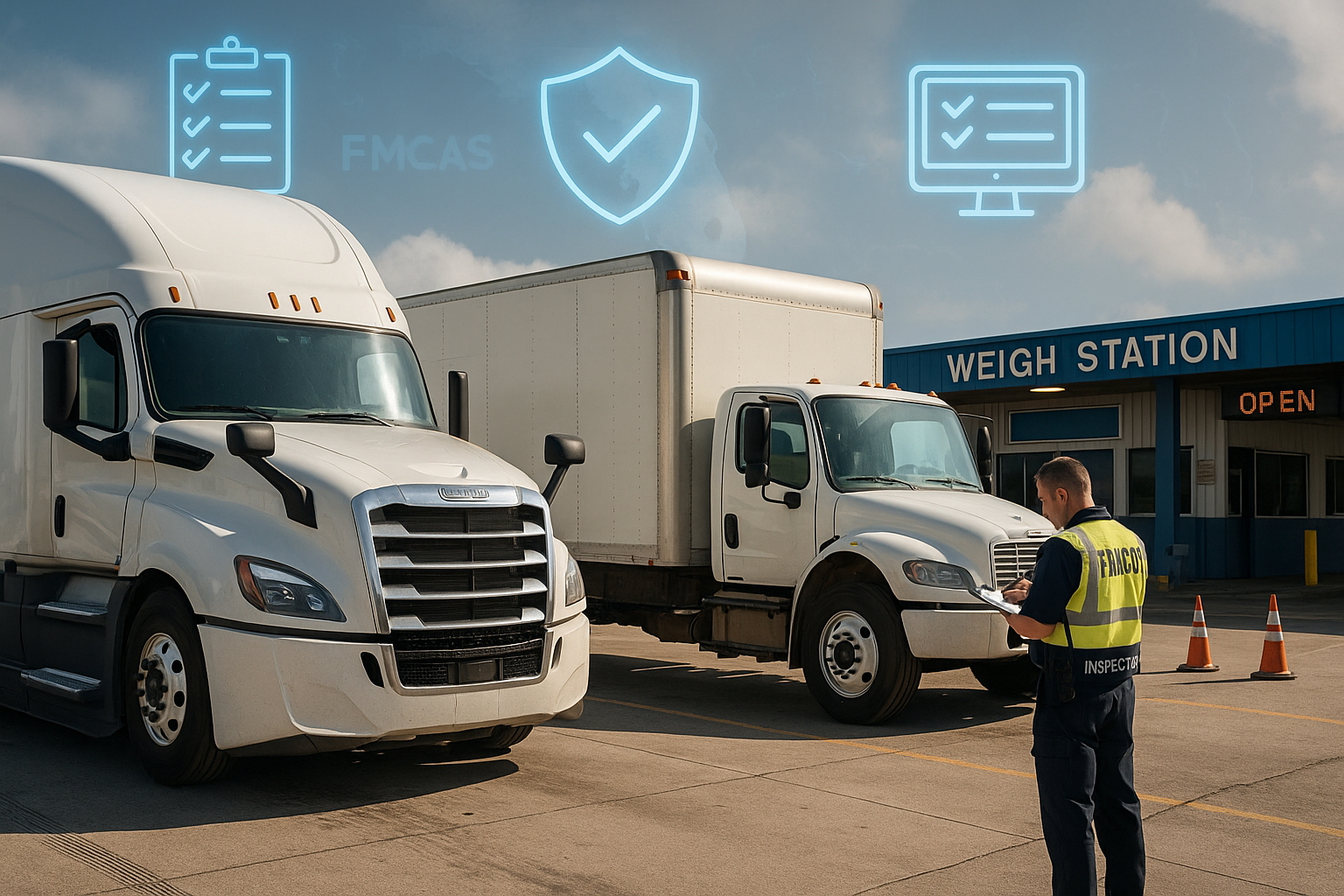
How to Stay FMCSA Compliant for Trucking Businesses in Florida
Staying FMCSA compliant helps protect your authority, reduce violation risk, and keep your trucking business moving with fewer regulatory setbacks.
Jump to a Section
Why FMCSA Compliance Matters
If your trucking company operates in interstate commerce, FMCSA compliance is not optional. Florida trucking businesses that fall behind on driver qualification files, log compliance, maintenance records, drug testing requirements, or audit preparation can face expensive penalties and operational disruption.
When a truck is pulled for inspection or a carrier is selected for review, regulators expect organized records and consistent compliance practices. Gaps in your system can create avoidable problems that affect operations, safety scores, and overall business stability.
- Violation penalties and fines
- Lower CSA scores
- Out-of-service exposure for drivers or equipment
- More audits or deeper reviews
- Problems affecting operating authority
- Insurance pricing or underwriting concerns
Strong compliance helps support safer operations, cleaner records, and a better insurance profile.
The Core Pillars of FMCSA Compliance
Most trucking businesses need consistent systems in these core areas:
Properly completed and updated for each driver.
Tracking drive time, breaks, and required rest periods.
Routine inspections, repairs, and documentation.
DOT program participation and required testing steps.
Maintaining required accident documentation and logs.
Meeting applicable federal insurance standards.
FMCSA Compliance Breakdown
Driver Qualification File Requirements
The FMCSA generally requires a complete driver qualification file for each applicable driver.
- Employment application
- Copy of CDL or license
- Medical examiner certificate when applicable
- MVR reports
- Road test or equivalent qualification documentation
- Safety performance history inquiries
Hours of Service and ELD Compliance
Interstate carriers generally need accurate Hours of Service tracking and, when applicable, approved ELD usage unless an exemption applies.
- Driving hours
- Rest periods
- Break compliance
- On-duty and off-duty status accuracy
Vehicle Inspection and Maintenance Compliance
Vehicle maintenance records and inspection routines are a major part of compliance.
- DVIR-related processes where applicable
- Annual DOT inspections
- Repair documentation
- Tire, brake, and lighting condition review
Drug and Alcohol Testing Program
Carriers subject to DOT drug and alcohol rules need proper enrollment and compliance procedures.
- Pre-employment testing
- Random testing
- Post-accident testing when required
- Reasonable suspicion procedures
- Return-to-duty steps when applicable
Accident Tracking and Reporting
Carriers should maintain organized accident records and supporting documentation.
- Accident register
- Police reports when applicable
- Driver statements
- Insurance-related documentation
New Entrant Safety Audit Preparation
New carriers should prepare early for the safety audit process and make sure records are organized before review.
How Compliance Can Affect Your Trucking Insurance
Insurance carriers often review safety history, inspection results, violation patterns, and operational controls when evaluating trucking risks. Cleaner compliance practices can support a stronger underwriting profile, while poor compliance can create pricing pressure or eligibility issues.
The Dupuy Insurance Team helps trucking businesses review insurance requirements and understand how compliance practices may affect their broader risk position.
- Review coverage requirements tied to trucking operations
- Prepare for audits and inspections more confidently
- Reduce avoidable compliance-related risk
- Support better insurance positioning over time
A stronger safety and compliance program can support better long-term insurance outcomes, but results vary by carrier and risk profile.
FMCSA Compliance FAQ
How often does the FMCSA perform audits?
Audits and reviews can happen for different reasons, including safety history, accidents, complaints, or other regulatory triggers.
What can trigger a DOT compliance review?
Common triggers can include accidents, roadside inspection problems, unsafe driving patterns, or other compliance concerns.
Do small carriers still need full FMCSA compliance systems?
Yes. Even a small trucking business may still need to comply with applicable federal requirements.
How can a carrier reduce FMCSA violation risk?
Training, maintenance, organized records, clean logs, and consistent driver file management are all important parts of a stronger compliance program.
The Dupuy Insurance Team — supporting truckers in Florida.