
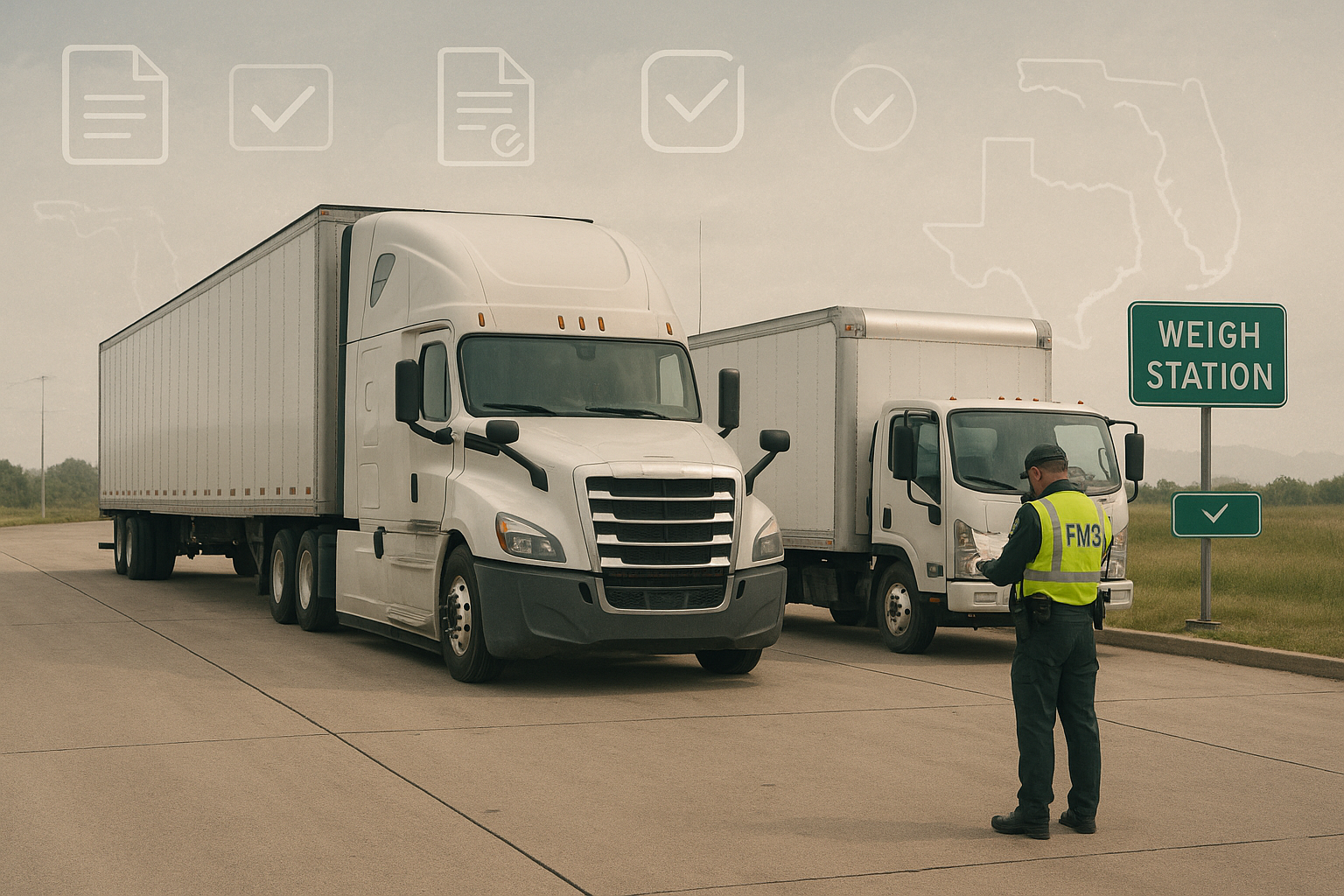
How to Confirm Your FMCSA Filings
for Trucking Businesses in Texas
Make sure your FMCSA filings and truck insurance filings are active, accurate, and aligned with your operation before a roadside issue or compliance review creates expensive problems.
Jump to a Section
Why Confirming Your FMCSA Filings Matters
If you run trucks in Texas or across state lines, your FMCSA profile, authority, and insurance-related filings should stay aligned with how your business actually operates. A mismatch or outdated filing can create avoidable problems involving loads, authority status, or insurance servicing.
- Possible compliance penalties
- Load delays involving brokers or shippers
- Insurance filing problems
- Authority-related disruptions
- Roadside or audit complications
The Dupuy Insurance Team helps Texas trucking businesses review filings and insurance alignment so they can identify issues before they grow into bigger disruptions.
What FMCSA Filings Should Texas Trucking Businesses Review?
The exact filing mix depends on the operation, but many carriers should review the following regularly.
MCS-150 – Motor Carrier Identification Report
The MCS-150 includes company and operational information such as legal name, address, vehicle count, and operation type. It should stay current and reflect real operations.
- Confirm legal name and DBA consistency
- Review vehicle count, mileage, and operating type
- Check USDOT status for active standing
BOC-3 – Process Agent Filing
The BOC-3 designates process agents and should be current and properly tied to the carrier entity.
- Confirm a valid filing exists
- Review company name accuracy
- Check whether entity changes require updates
BMC-91X and MCS-90 – Insurance Filings
Insurance policies and federal insurance filings should line up with authority and the actual operation.
- Review BMC-91 or BMC-91X filing status
- Review MCS-90 where applicable
- Confirm names and entity types match
- Check limits relative to the operation and freight
UCR – Unified Carrier Registration
If the operation falls under interstate requirements, annual UCR registration should be reviewed carefully and renewed on time.
Texas-Specific Considerations
Depending on whether the business is intrastate, interstate, specialized, or permit-sensitive, Texas-level requirements may also need review alongside federal filings.
Step-by-Step: How to Confirm Your FMCSA Filings
- Review your FMCSA and SAFER profile. Confirm DOT and MC details, status, and company data.
- Check your insurance filing status. Make sure the insurance-related filing information reflects the current policy situation.
- Review your MCS-150 timing and details. Confirm that required updates are not overdue and that the information is accurate.
- Confirm UCR registration. Review the applicable year and power-unit reporting if required.
- Match everything together. Company name, address, entity type, insurance, and operating profile should align.
Some carriers handle an initial check on their own. Others prefer to have an insurance office help verify that everything lines up properly.
Schedule an FMCSA Filing Review
Clear review, practical guidance, and no unnecessary guesswork.
How The Dupuy Insurance Team Helps Texas Truckers
Truckers make money by moving freight, not by chasing filing mismatches. Our insurance office helps trucking businesses review filing and insurance alignment so they can better understand whether their setup reflects real operations.
- We review FMCSA profile data against the business operation
- We help coordinate insurance filing alignment with carriers
- We help newer authorities start with a cleaner setup
- We support owner-operators and fleets through operational changes
Common Filing Problems We See
- Policy name does not match authority records
- Liability limits do not align with freight or operations
- MCS-150 shows outdated mileage or unit count
- BOC-3 reflects an outdated address or entity
- UCR status is missed or inaccurate
- Old insurance filing activity remains after policy changes
It is usually far less expensive to fix these issues before they create a business interruption.
Frequently Asked Questions About FMCSA Filings
Can I be insured and still have filing issues?
Yes. The existence of a policy does not automatically mean every filing and authority item is aligned correctly.
How often should I review my filing setup?
Regularly, especially when policies renew, carriers change, equipment changes, or authority details are updated.
Does the MCS-150 need updating after business changes?
Yes. Operational or structural changes may require updates so the filing reflects the real business.
Can The Dupuy Insurance Team help me review my setup?
Yes. We can help review your filings and insurance alignment and talk through the next steps.
Ready to Review Your FMCSA Filings?
If you are not fully sure your Texas trucking filings and insurance setup are aligned, The Dupuy Insurance Team can help you review the details.
The Dupuy Insurance Team — helping Texas truckers stay compliant, protected, and moving.